

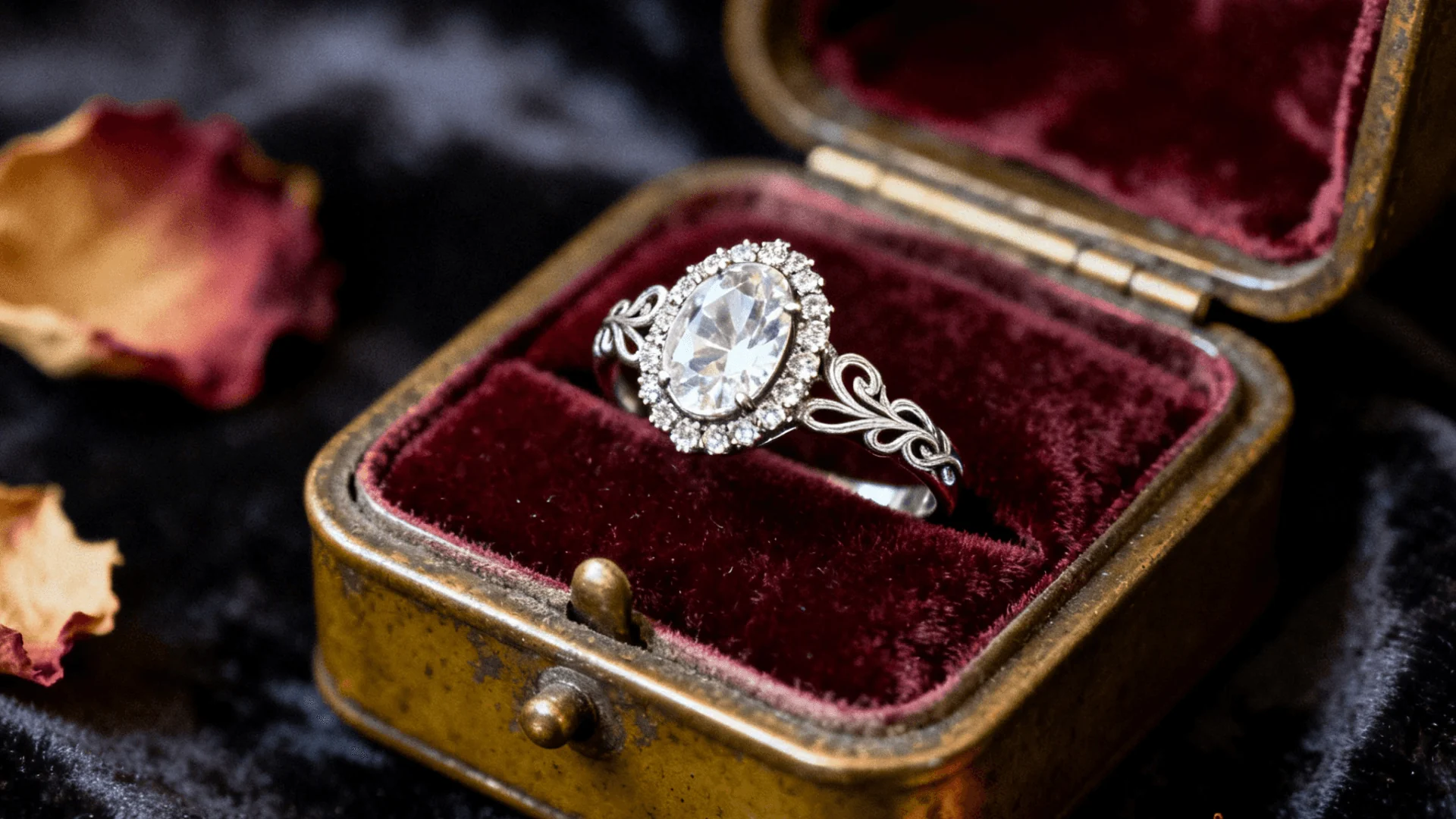
Look at an engagement ring from the side and the craftsmanship becomes easier to read. A line of metal that looked straight on a screen may curve slightly where the shoulder joins the head. Claws that seemed identical at first glance may differ in length. Some differences are intentional, particularly around an irregular stone. Others tell you how much attention the maker gave to the last stages of finishing.
The discussion of modern engagement ring craftsmanship is most useful with a finished ring in front of you. Give the underside and edges as much time as the face. They show how the jeweller balanced appearance with the need for a smooth, secure piece.
Follow the lines around the ring
Look down on the ring and then turn it a little at a time. Check how the shoulders rise towards the setting and where the band changes width. On a symmetrical design, the two sides should look related. On an intentionally uneven design, see whether the transitions still feel deliberate. Smooth joins are particularly noticeable where a narrow shank meets a larger basket.
Check the finish in light that comes from one side. A bright polish can reveal pits or waviness as the reflected line moves. A brushed section should generally look coherent in the area where the finish was intended. If a polished bevel meets a matte centre, see how clearly the boundary has been kept, including near corners.
Examine what holds the stone
Look at the claws with the jeweller and ask how each one meets the diamond. From above, the tips can be discreet and still do their work. From the side, they should follow the stone without leaving obvious spaces where a rough edge could catch. A shaped claw should protect the point of a pear or princess cut without making the outline hard to read.
A bezel offers a different set of details. Follow its upper line around the stone and see whether the coverage looks even for that particular shape. For small pavé stones, check whether the row flows with the shoulder. Inspect the outside of the band with a fingertip rather than pulling at the setting. If anything feels sharp, ask the jeweller to explain or check it.
Ask how the finish can be kept in good order
Look at the inside of the shank and ask where a size adjustment could be made. A plain area may be useful if the ring has engraving or small stones elsewhere. Check which finishes the jeweller can restore after the work. Some textures require the maker’s own tools or technique to reproduce closely.
Ask what an inspection would cover once the ring has been worn for a while. A ring with several small stones may have a different maintenance routine from a plain solitaire. If you are buying a bespoke piece, ask the jeweller to explain which measurements or design files they keep for later service. That detail can make a repair more predictable.
Final Thought
Look for workmanship you can see and feel. Straight lines should look intentional, joins should be smooth and the setting should suit the stone. A few minutes with the ring turned away from its best display angle can tell you a great deal about how it was finished.